


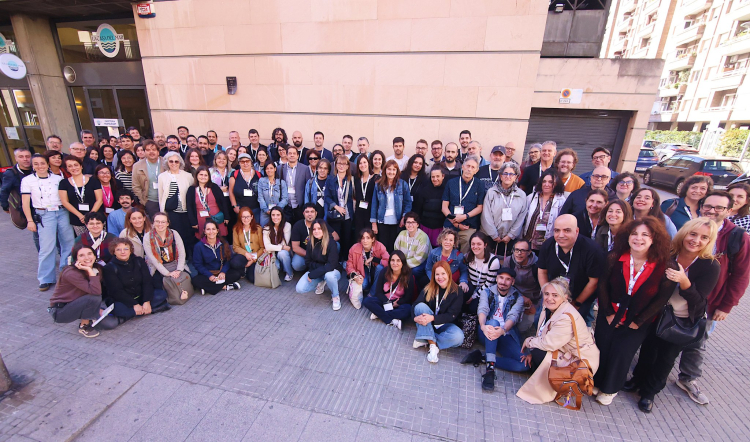
Last Friday, October 24, the Òmnia Network organized its annual meeting where it reflected on the impact of technology on the well-being of people and communities. Under the title 'Digital Health and Community: the Òmnia Network as a Meeting Point', the Òmnia 2025 Conference brought together a total of 115 dynamic people and professionals linked to community action and digital social innovation. First, Jaume Romero, general director of Community Action and Social Innovation, welcomed the participants, recognizing the collective work to build a cohesive and digitally inclusive society and claiming the program as a tool for social transformation. T he following, the presentation 'Impact of ICTs on people's health' was given by Rosa Díaz, doctor in psychology and expert in addictive behaviors in adolescents, who addressed the impact of ICTs on people's health. Rosa Díaz warned about the possible consequences of misuse of technology and highlighted the importance of prevention, support and awareness-raising by families and schools.
Next, the round table 'And now what? Critical and transformative proposals in TRIC' featured four initiatives that work to promote a more conscious use of technology. On behalf of the Salut Mental Catalunya entity, Marta Poll presented mutual support groups and how digital tools can expand ties and promote collective well-being. Alejandro Almansa from the Education for Critical Action entity called for an educational and preventive approach and shared the awareness-raising projects elpep.info and laclara.info . From the Nadir association, Clàudia Barberà spoke about the 'Don't deny it' project and the use of audiovisual media to confront hate speech. Laia Velasco from the Resistència Videolúdica collective proposed an anti-capitalist and feminist view of the world of video games and stressed the need to create safe spaces within a traditionally masculinized culture. Finally, Raúl Moreno, Secretary General of Social Rights and Inclusion, closed the Òmnia 2025 Conference by stating that the Òmnia Network was not only a set of technological spaces, but a living community that accompanies people and generates links in the community.